The healthcare industry is undergoing a massive transformation driven by data engineering services. From electronic health records (EHRs) to predictive analytics, healthcare organizations are leveraging data engineering to improve patient care, streamline operations, and reduce costs.
However, many misconceptions exist about what data engineering is and how it impacts healthcare. Some believe it’s just about storing data, while others assume it’s only for large hospitals. These myths prevent many healthcare organizations from fully utilizing data engineering service providers.
What is the Role of Data Engineering Services in Supporting Healthcare?
In today’s digital era, healthcare organizations handle vast amounts of data daily. From patient medical records to real-time monitoring devices, the volume, variety, and velocity of healthcare data are overwhelming. Data engineering services play a crucial role in ensuring that this data is collected, processed, stored, and analyzed effectively to improve patient outcomes and streamline healthcare operations.
Without data engineering, healthcare data remains unstructured, difficult to access, and underutilized. Data engineering services help transform raw data into actionable information, ensuring that healthcare professionals make informed decisions based on accurate and up-to-date information.
This blog explores the role of data engineering services in supporting healthcare, the key benefits they offer, and how AWS services improve data processing capabilities for healthcare institutions.
The Growing Importance of Data in Healthcare
The healthcare industry generates an enormous volume of data from multiple sources, including:
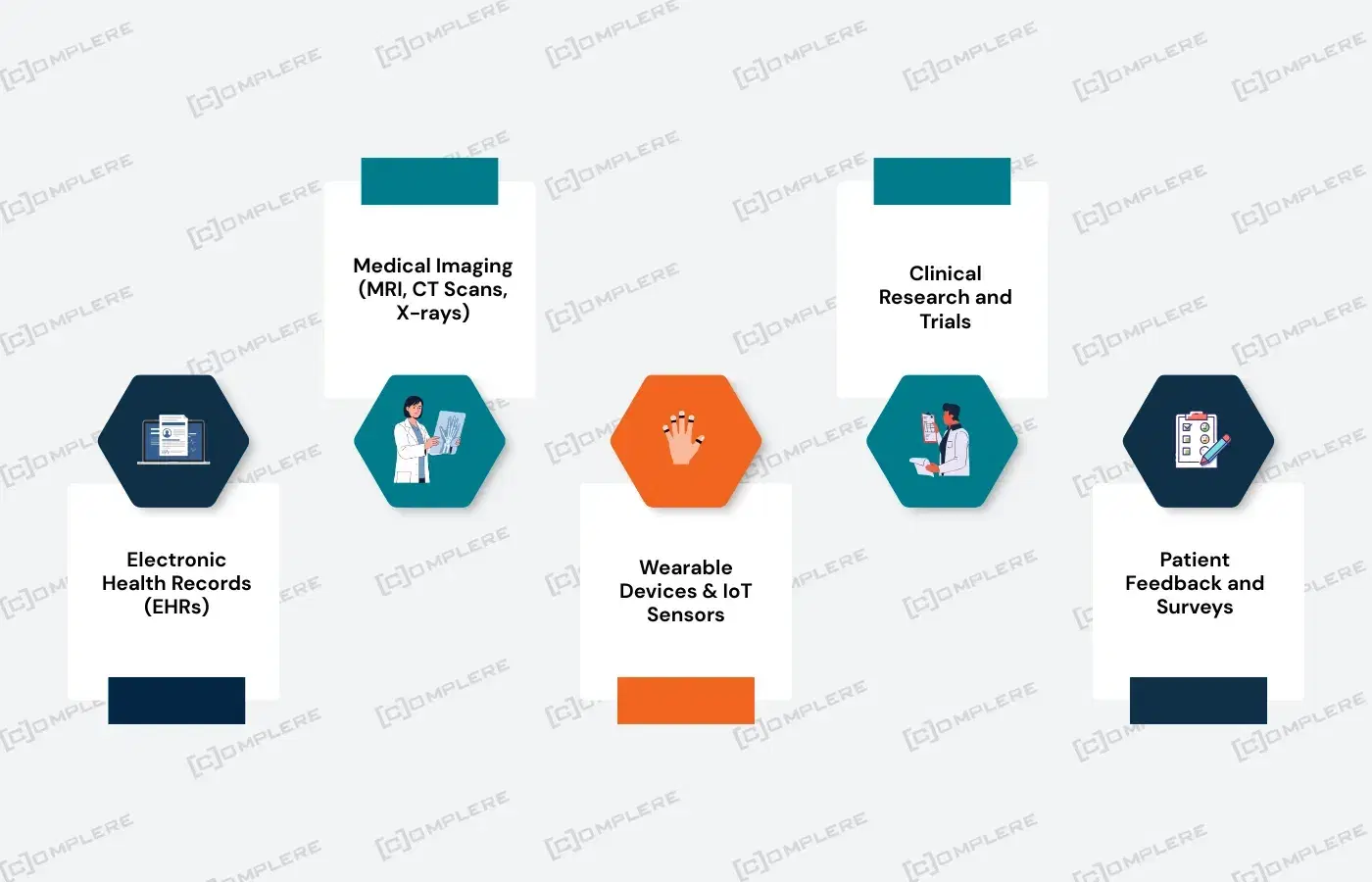
- Electronic Health Records (EHRs)
Electronic Health Records (EHRs) are digital versions of a patient's medical history, treatment plans, and diagnostic reports. These records need to be stored securely and retrieved instantly for efficient patient care. Data engineering ensures that EHR systems are well-structured, easily accessible, and interoperable across different healthcare platforms. - Medical Imaging (MRI, CT Scans, X-rays)
Radiology and medical imaging generate massive unstructured data files. Processing and storing these files require high-performance computing and storage solutions. Data engineering services help convert these images into structured formats, making them easier to analyze with AI-driven diagnostic tools. - Wearable Devices & IoT Sensors
Wearable devices such as smartwatches, glucose monitors, and heart rate trackers generate real-time patient data. Data engineering services help streamline, store, and analyze this data for better preventive healthcare and early diagnosis. - Clinical Research and Trials
Clinical trials produce large datasets involving patient demographics, genetic information, and drug efficacy reports. Data engineering ensures that this data is cleaned, structured, and analyzed accurately to accelerate medical research and drug discovery. - Patient Feedback and Surveys
Hospitals and clinics collect patient feedback through surveys and online reviews. Data engineering helps categorize and analyze this data to improve hospital services, patient satisfaction, and healthcare quality.
How Do Data Engineering Services Help Healthcare?
- Data Integration & Storage
The Challenge: Healthcare data exists in multiple formats across different platforms, making it difficult to consolidate and analyze.
The Solution: Data engineering services integrate data from multiple sources, including EHRs, IoT devices, and clinical records, into a unified system. This ensures that healthcare professionals can access a single, structured dataset for improved diagnosis and treatment.
Example: A hospital integrating EHR data with lab test results and wearable device data can provide a comprehensive view of a patient's health condition. - Real-Time Data Processing
The Challenge: Critical healthcare situations require instant data processing to detect anomalies and alert medical staff.
The Solution: Data engineering enables real-time data streaming from medical devices, enabling faster diagnostics and emergency alerts for critical conditions like heart attacks or abnormal oxygen levels.
Example: Wearable ECG monitors can instantly alert doctors about an irregular heartbeat, potentially saving lives. - Predictive Analytics
The Challenge: Predicting disease trends and patient risks manually is time-consuming and inefficient.
The Solution: Data engineering services enable predictive analytics, helping doctors anticipate diseases, plan preventive care, and personalize treatments.
Example: AI-powered predictive models analyze past patient data to detect early signs of diabetes, heart disease, or cancer. - Regulatory Compliance
The Challenge: Healthcare data is sensitive and must comply with strict regulations like HIPAA (USA), GDPR (Europe), and other regional laws.
The Solution: Data engineering services implement encryption, anonymization, and access control to ensure data privacy and compliance.
Example: Hospitals using AWS services like AWS Key Management Service (KMS) and AWS IAM can control data access securely. - Cost Optimization
The Challenge: Manual data processing and storage can lead to high operational costs.
The Solution: Cloud-based data engineering services optimize storage, processing, and computing costs by implementing serverless and scalable solutions.
Example: Using Amazon S3 for storage and AWS Glue for ETL reduces infrastructure costs while maintaining high performance.
The Role of AWS in Healthcare Data Engineering
AWS offers highly scalable, secure, and cost-efficient solutions for data engineering in healthcare. Some key AWS services include: 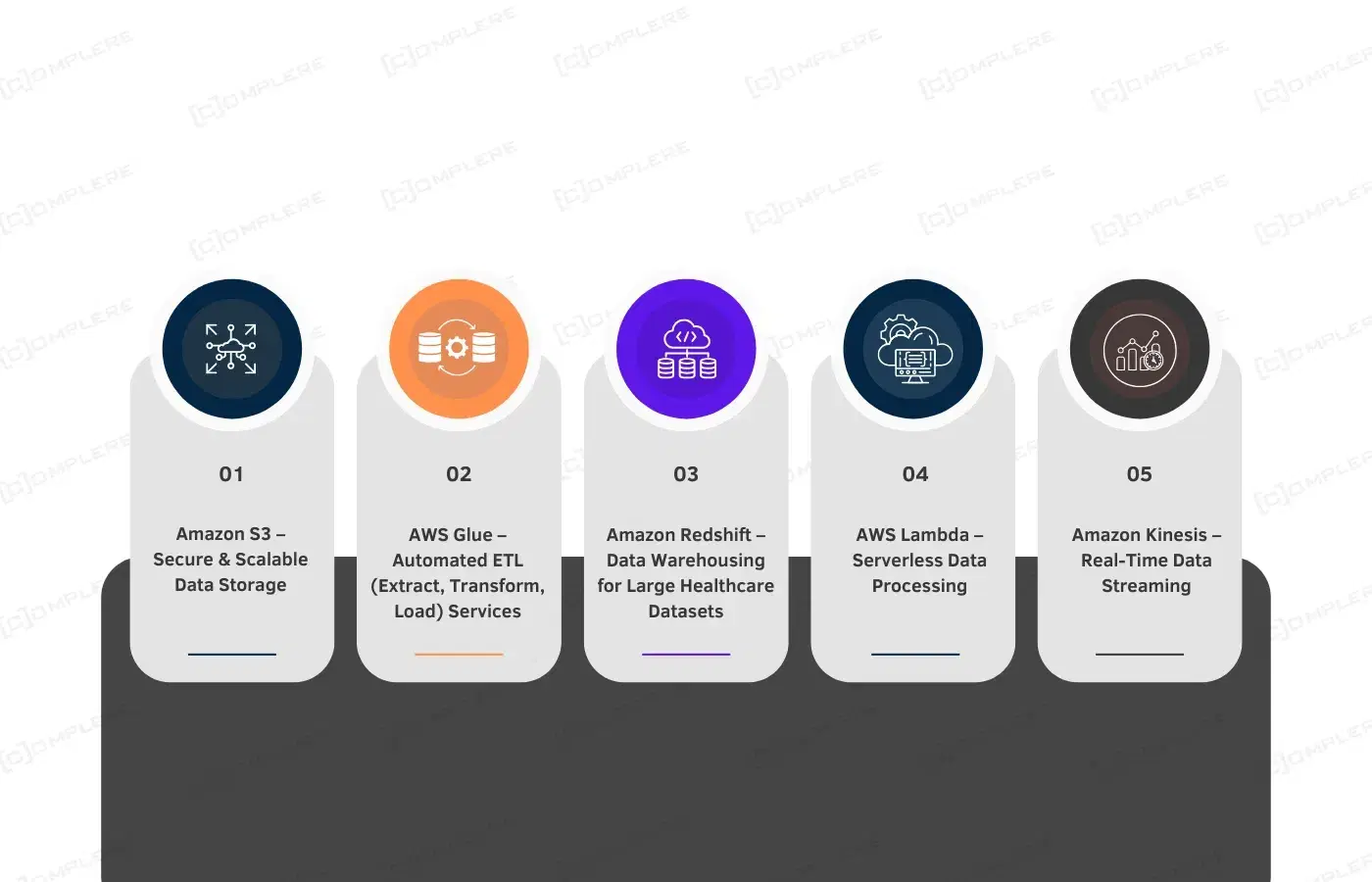
- Amazon S3 – Secure & Scalable Data Storage
Amazon S3 provides highly durable, scalable, and secure object storage, making it an ideal choice for storing EHRs, medical images, and real-time sensor data. - AWS Glue – Automated ETL (Extract, Transform, Load) Services
AWS Glue helps automate data extraction, transformation, and loading, ensuring that healthcare data is structured and ready for analysis. - Amazon Redshift – Data Warehousing for Large Healthcare Datasets
Amazon Redshift is a fast, scalable data warehouse that enables complex queries and analytics on large healthcare datasets. - AWS Lambda – Serverless Data Processing
AWS Lambda allows event-driven real-time data processing, ideal for real-time patient monitoring and instant alerts for medical conditions. - Amazon Kinesis – Real-Time Data Streaming
Amazon Kinesis processes real-time data streams from IoT healthcare devices, making it useful for continuous patient monitoring and instant diagnostics.
Real-World Impact of Data Engineering in Healthcare
Case Study 1: Predictive Healthcare Analytics
A leading hospital in the U.S. integrated AI-driven predictive analytics using AWS services for data engineering. By analyzing EHR data, wearable device readings, and patient history, the hospital reduced hospital readmission rates by 30% and improved preventive care.
Case Study 2: Faster Diagnosis Using Medical Imaging AI
A healthcare provider used data engineering and machine learning to analyze MRI and CT scans. This AI-driven approach helped radiologists detect anomalies 50% faster, reducing diagnosis time and improving treatment outcomes.
Case Study 3: Cost Savings Through Cloud-Based Data Engineering
A hospital group transitioned from on-premises data centers to AWS cloud using Amazon S3, Redshift, and Glue. The result? A 40% reduction in infrastructure costs and improved data access for medical professionals across multiple locations.
Data engineering services are revolutionizing healthcare, providing real-time data processing, predictive analytics, and cost-efficient solutions. From EHR management to medical imaging and IoT-driven patient monitoring, data engineering enables faster, more efficient, and secure healthcare services.
6 Myths and Facts About Data Engineering Services in Healthcare
Data engineering is transforming healthcare by enabling better data integration, analysis, and decision-making. However, despite its growing adoption, many misconceptions prevent healthcare organizations from fully leveraging its benefits.
Let us check out six common myths surrounding data engineering services in healthcare and reveal the facts that show why it is essential for modern healthcare systems.
Myth 1: Data Engineering is Only for Large Healthcare Institutions
Fact: Even small clinics and diagnostic centers can benefit from data engineering services. Cloud-based solutions, like AWS services for data engineering, allow scalable and cost-effective data processing, making it accessible for healthcare providers of all sizes.
Many believe that only large hospitals with extensive IT teams can afford data engineering. In reality, cloud technology has made it possible for even small healthcare providers to implement efficient data processing.
Many believe that only large hospitals with extensive IT teams can afford data engineering. In reality, cloud technology has made it possible for even small healthcare providers to implement efficient data processing.
Example:
A small diagnostic center that uses AWS Glue for ETL (Extract, Transform, Load) processes can seamlessly integrate patient test results from multiple sources without investing in costly infrastructure.
Key Takeaway: Any healthcare provider, big or small, can use cloud-based data engineering solutions to streamline operations and improve patient care.
A small diagnostic center that uses AWS Glue for ETL (Extract, Transform, Load) processes can seamlessly integrate patient test results from multiple sources without investing in costly infrastructure.
Key Takeaway: Any healthcare provider, big or small, can use cloud-based data engineering solutions to streamline operations and improve patient care.
Myth 2: Data Engineering is Just About Storing Medical Records
Fact: Data engineering goes far beyond storage. It includes data processing, transformation, integration, and real-time analytics.
Some think that data engineering service providers only help hospitals store medical records digitally. However, data engineering plays a critical role in transforming raw healthcare data into actionable information.
Some think that data engineering service providers only help hospitals store medical records digitally. However, data engineering plays a critical role in transforming raw healthcare data into actionable information.
How It Helps Healthcare:
Data Integration: Combines data from EHRs, medical imaging, and IoT devices.
Data Transformation: Converts unstructured data into meaningful formats.
Predictive Analytics: AI-driven information help doctors detect early warning signs of diseases.
Data Integration: Combines data from EHRs, medical imaging, and IoT devices.
Data Transformation: Converts unstructured data into meaningful formats.
Predictive Analytics: AI-driven information help doctors detect early warning signs of diseases.
Example:
A hospital using Amazon Redshift can analyze historical patient data to predict trends in disease outbreaks and adjust resources accordingly.
Key Takeaway: Data engineering enables analytics, automation, and decision-making, not just storage.
A hospital using Amazon Redshift can analyze historical patient data to predict trends in disease outbreaks and adjust resources accordingly.
Key Takeaway: Data engineering enables analytics, automation, and decision-making, not just storage.
Myth 3: Implementing Data Engineering is Too Expensive
Fact: Cloud-based data engineering consulting services provide pay-as-you-go pricing models, allowing healthcare institutions to optimize costs while ensuring efficiency.
Many healthcare organizations worry about the high cost of implementing data engineering. However, AWS services for data engineering offer cost-effective solutions that scale based on usage.
Many healthcare organizations worry about the high cost of implementing data engineering. However, AWS services for data engineering offer cost-effective solutions that scale based on usage.
How AWS Helps Reduce Costs:
- AWS Lambda – Processes data in a serverless environment, reducing infrastructure costs.
- Amazon Redshift Spectrum – Enables low-cost analytics without moving data.
- Amazon S3 – Provides cost-efficient storage with automatic tiering for optimal savings.
Example:
A mid-sized hospital reduced its data storage costs by 40% by switching from on-premise servers to AWS cloud storage.
Key Takeaway: Cloud-based data engineering is affordable, flexible, and scalable, making it accessible to healthcare institutions of all sizes.
A mid-sized hospital reduced its data storage costs by 40% by switching from on-premise servers to AWS cloud storage.
Key Takeaway: Cloud-based data engineering is affordable, flexible, and scalable, making it accessible to healthcare institutions of all sizes.
Myth 4: Data Engineering is Only for IT Departments
Fact: Doctors, nurses, and administrative staff all benefit from data engineering services.
Many believe that data engineering is only relevant for IT teams. However, in healthcare, real-time data access and analytics empower medical professionals to make better decisions and improve patient care.
Many believe that data engineering is only relevant for IT teams. However, in healthcare, real-time data access and analytics empower medical professionals to make better decisions and improve patient care.
How It Helps Different Healthcare Professionals:
Doctors – Use AI-powered dashboards to analyze patient history.
Nurses – Get real-time alerts for critical patient conditions.
Administrators – Optimize hospital resources and reduce patient wait times.
Doctors – Use AI-powered dashboards to analyze patient history.
Nurses – Get real-time alerts for critical patient conditions.
Administrators – Optimize hospital resources and reduce patient wait times.
Example:
A hospital using AWS QuickSight enables doctors to visualize patient data trends and make faster, data-driven treatment decisions.
Key Takeaway: Data engineering benefits the entire healthcare ecosystem, not just IT teams.
A hospital using AWS QuickSight enables doctors to visualize patient data trends and make faster, data-driven treatment decisions.
Key Takeaway: Data engineering benefits the entire healthcare ecosystem, not just IT teams.
Myth 5: Data Security Risks Are Too High with Data Engineering
Fact: Leading data engineering companies implement strict security protocols, encryption, and compliance measures to protect healthcare data.
Many healthcare organizations fear that migrating to cloud-based data engineering services could expose sensitive patient data to cyber threats. However, modern cloud platforms follow industry-standard security and compliance guidelines.
Many healthcare organizations fear that migrating to cloud-based data engineering services could expose sensitive patient data to cyber threats. However, modern cloud platforms follow industry-standard security and compliance guidelines.
How AWS Ensures Data Security:
- AWS Shield – Protects against cyber threats and DDoS attacks.
- AWS Identity and Access Management (IAM) – Controls user permissions and access.
- AWS Key Management Service (KMS) – Encrypts patient data for secure storage.
- HIPAA & GDPR Compliance – Ensures data governance follows healthcare regulations.
Example:
A hospital using AWS IAM restricts access to patient records, ensuring that only authorized medical staff can view or modify data.
Key Takeaway: Data engineering services improve security and compliance, making cloud-based healthcare solutions safer than on-premises systems.
A hospital using AWS IAM restricts access to patient records, ensuring that only authorized medical staff can view or modify data.
Key Takeaway: Data engineering services improve security and compliance, making cloud-based healthcare solutions safer than on-premises systems.
Myth 6: Manual Data Handling is More Reliable than Automated Data Engineering
Fact: Automated data engineering eliminates human errors, improves efficiency, and ensures accurate data processing. Advanced AI and machine learning models help detect anomalies, reducing the risk of medical errors.
Tips to Find the Best Data Engineering Services in Healthcare
Now that we have debunked the myths, the next step is finding the right data engineering service providers for your healthcare organization. Here are some key factors to consider:
1. Choose a Provider with Healthcare Expertise
Not all data engineering companies specialize in healthcare. Choose a provider like Complere Infosystem, which understands healthcare data complexities, compliance requirements, and patient privacy regulations.
2. Ensure Data Security & Compliance
Your provider must follow HIPAA, GDPR, and other healthcare regulations. Ask about encryption, access control, and backup solutions before selecting a service.
3. Look for Scalable Cloud-Based Solutions
Cloud platforms like AWS provide scalability and cost optimization. Ensure your provider offers AWS services for data engineering to handle real-time patient data efficiently.
4. Check Their Data Integration Capabilities
A good data engineering consulting service should help integrate multiple data sources, including EHRs, imaging systems, and wearable devices.
5. Prioritize Real-Time Data Processing
For critical healthcare decisions, real-time data processing is essential. Ensure your provider supports technologies like Apache Kafka, AWS Kinesis, and Spark Streaming.
6. Evaluate Their Support & Maintenance Services
A reliable provider should offer ongoing support, system monitoring, and updates to keep your data infrastructure running smoothly.
Conclusion
Data engineering services are revolutionizing the healthcare industry, enabling data-driven decision-making, improving patient outcomes, and reducing costs. However, misconceptions about cost, security, and complexity prevent many healthcare organizations from adopting these solutions.
By debunking these 6 myths, it’s clear that data engineering is accessible, secure, and beneficial for healthcare providers of all sizes. Whether you’re a small clinic or a large hospital, implementing data engineering consulting services can improve efficiency, improve compliance, and optimize patient care.
As Per My Opinion if your healthcare organization isn’t using data engineering services, you’re missing out on opportunities to improve operations and provide better patient care. Partnering with experienced data engineering service providers, like Complere Infosystem, ensures you get a customized, secure, and cost-effective solution.
Looking for optimized healthcare operations? Click here for trusted data engineering services and approach success.