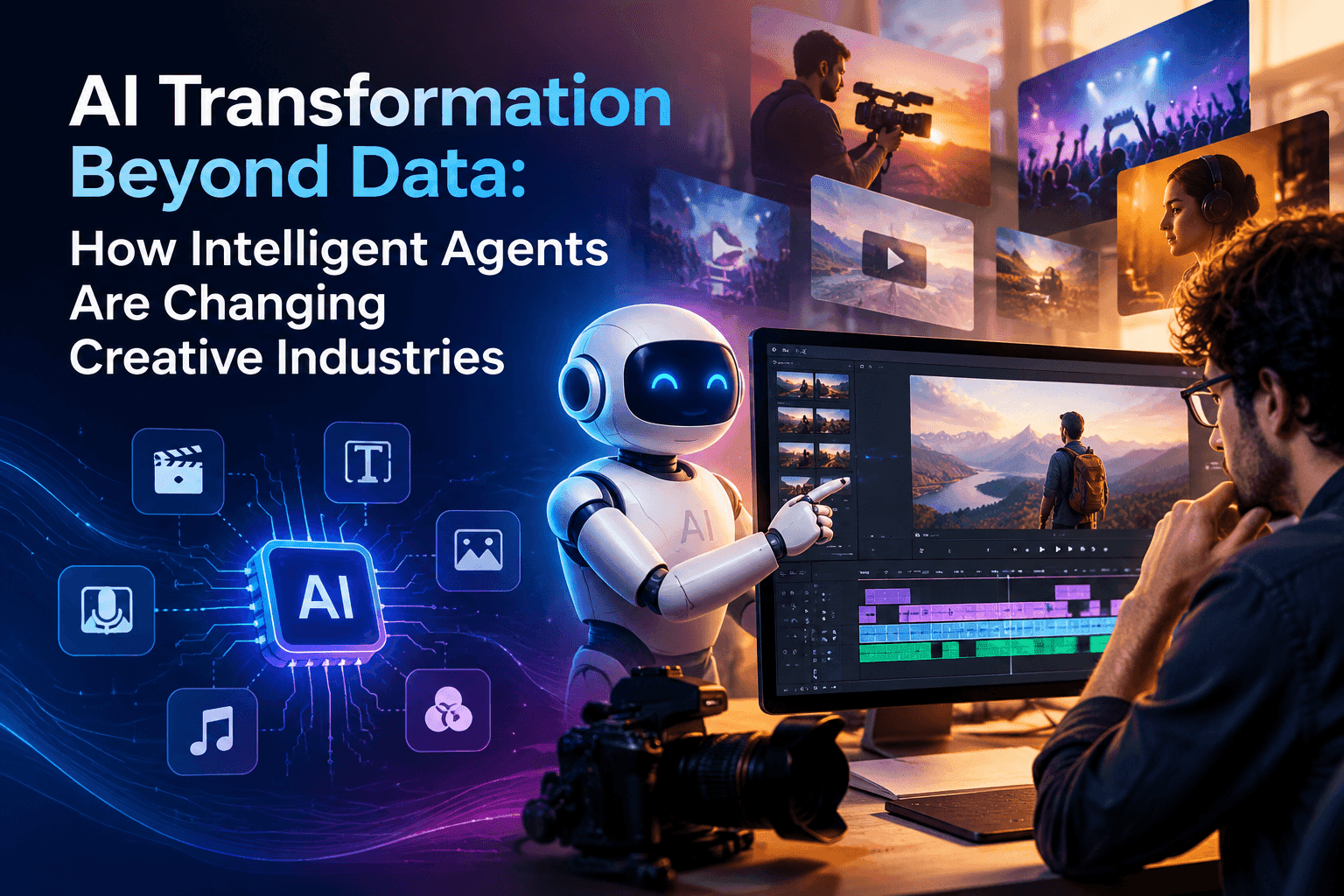
Artificial intelligence has become a major driver of digital transformation across industries. For years, businesses have focused on using AI to analyze data, automate processes, improve decision-making, and create operational efficiencies. However, the next phase of AI transformation is expanding beyond data-driven tasks.
Today, intelligent agents are entering creative industries and changing how professionals approach content production, design, media creation, and editing workflows.
Creative work has traditionally depended heavily on human expertise, judgment, and manual execution. While creativity remains a human-driven process, many repetitive tasks involved in production require significant time and effort. Reviewing large amounts of footage, organizing content, creating multiple versions, adjusting audio, and preparing final deliverables often consume valuable creative resources.
With AI agents, businesses and creators can now automate parts of these workflows while maintaining creative control. These systems do not replace creative professionals. Instead, they act as intelligent assistants that handle repetitive execution, allowing teams to focus more on strategy, storytelling, and creative decisions.
This shift represents a broader evolution in AI transformation where intelligent systems are becoming active contributors to professional workflows.
The Rise of Intelligent Agents in Digital Transformation
Traditional automation systems were designed to follow predefined instructions. They could complete repetitive tasks based on specific rules but had limited ability to understand context.
Intelligent agents introduce a different approach. These AI-powered systems can understand goals, analyze information, make decisions, and complete multi-step tasks based on user direction.
In business environments, AI agents are already being explored for areas such as:
- Customer support automation
- Data analysis
- Workflow management
- Research assistance
- Business process optimization
Creative industries are now experiencing a similar transformation.
Video production, marketing, advertising, and media teams often deal with complex workflows involving multiple stages. From managing raw assets to preparing final content versions, professionals spend significant time on operational tasks before reaching the creative finishing stage.
AI agents are helping simplify these processes by understanding instructions and completing specific workflow steps.
How AI Agents Are Transforming Creative Industries
Creative industries depend on both imagination and execution. A filmmaker, content creator, or marketing team may have a clear vision for a project, but turning that vision into a finished product requires many operational steps.
For example, video production involves:
- Reviewing hours of footage
- Selecting suitable clips
- Removing unnecessary sections
- Organizing timelines
- Adjusting pacing
- Improving audio quality
- Creating different versions for platforms
These tasks are important, but they can slow down production cycles.
AI transformation in creative industries focuses on reducing this operational burden. Intelligent agents can support professionals by handling time-consuming processes while leaving final decisions with human creators.
This approach creates a new collaboration model where AI manages execution and humans guide creative direction.
Moving From AI Generation to AI Execution
Much of the conversation around artificial intelligence has focused on content generation. However, creative professionals often require more than generated content.
They need tools that understand existing projects, follow creative instructions, and work within professional workflows.
This is where AI-powered editing and creative assistants are becoming valuable.
Instead of creating a complete video from scratch, intelligent agents can support editors by working with existing footage and project requirements.
For example, an editor may need to create a first version of a documentary sequence. Traditionally, this requires reviewing hours of footage manually before building an initial timeline.
An AI agent can assist by analyzing footage, identifying useful sections, organizing material, and preparing a starting point that the editor can refine.
This allows professionals to spend more time on storytelling decisions rather than repetitive preparation.
AI Video Editing and the Future of Content Production
Video has become one of the most important formats for businesses. Companies use videos for marketing campaigns, employee training, customer education, product demonstrations, and social media communication.
However, producing high-quality video content consistently requires efficient workflows.
Modern AI video editing solutions are helping teams improve productivity by supporting different stages of production.
Some key capabilities include:
- Automated footage analysis
- Intelligent clip selection
- Timeline organization
- Audio improvement
- Colour adjustments
- Content versioning
- Platform-specific adaptations
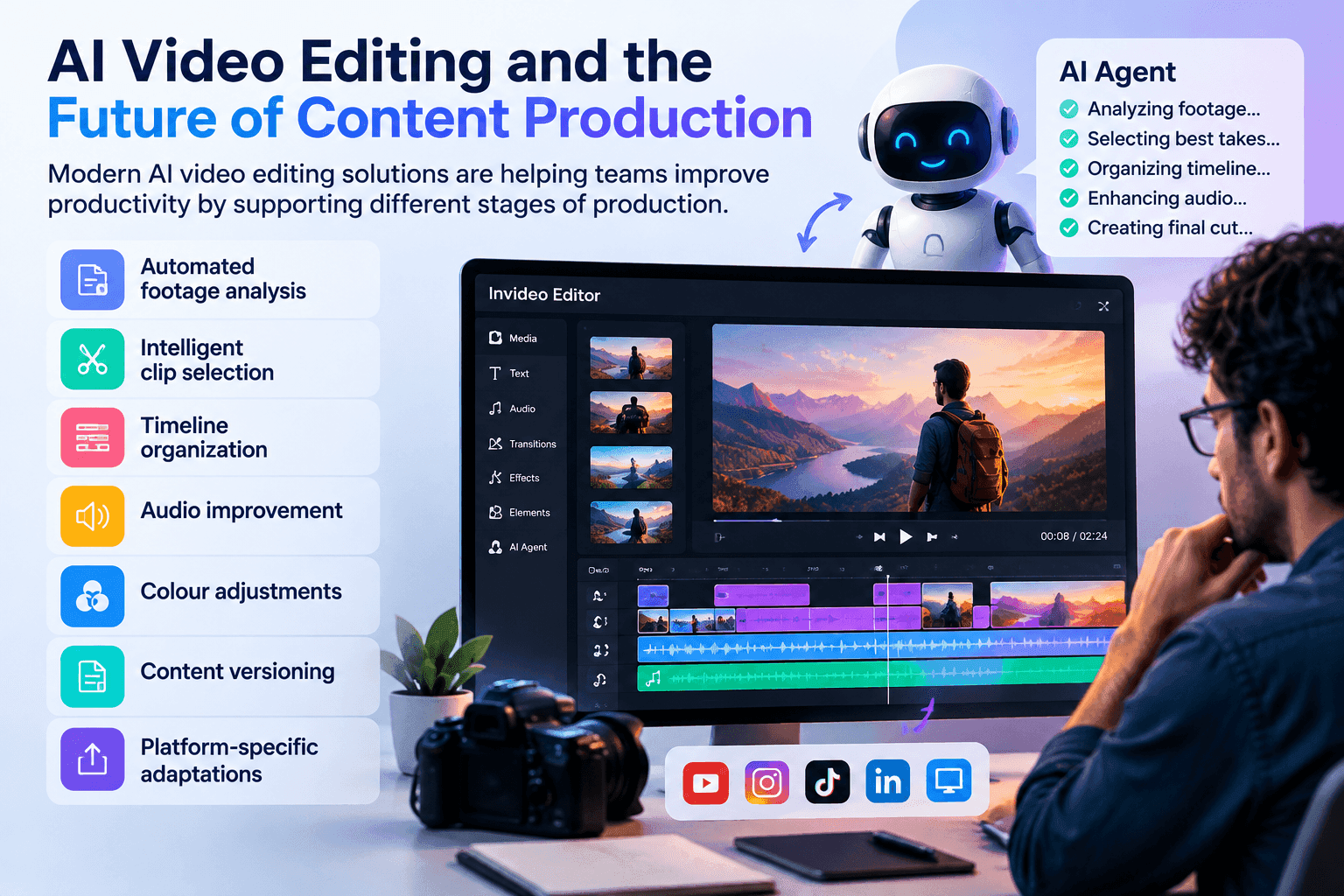
Invideo Editor represents this shift toward AI-assisted creative workflows by combining professional editing capabilities with AI editing agents. It allows creators and editors to work with a timeline-based editing environment while assigning repetitive editing tasks to AI agents.
The goal is not to remove creative control but to reduce manual execution.
How AI-Powered Editing Platforms Support Professional Workflows
Professional editors often begin projects with unorganized footage. Before creative decisions can happen, they must create a usable foundation.
This initial stage is commonly known as creating a base cut or assembly cut.
A base cut includes the usable footage arranged into a complete timeline structure. It removes repeated takes, mistakes, unnecessary pauses, and unusable sections. It provides editors with a strong starting point for further refinement.
AI agents are becoming useful during this stage because they can analyze large amounts of content faster than manual review.
Invideo Editor helps demonstrate this approach through AI-assisted timeline workflows. For teams looking for advanced automation in professional editing environments, Invideo Editor with Agentic Video Editor enables users to assign editing tasks to AI agents that can review footage, assist with timeline assembly, and support the editing process while keeping the project editable.
This type of workflow is especially useful for:
- YouTube creators managing long recordings
- Marketing teams producing frequent video content
- Agencies handling multiple client projects
- Editors working with interviews, podcasts, documentaries, and commercial videos
The key advantage is that creators maintain control over the final outcome while reducing the amount of manual work required.
The Role of AI Agents in Scaling Creative Operations
As businesses increase their dependence on video communication, creative teams face growing demands.
A marketing department may need:
- Long-form videos
- Short social clips
- Product videos
- Training materials
- Customer testimonials
- Regional versions
Producing all these assets manually can create workflow challenges.
AI agents help organizations scale creative operations by making repetitive processes faster and more consistent.
For example, a single recorded webinar can be transformed into multiple content formats. AI-assisted workflows can help identify important sections, prepare shorter versions, and organize content for different channels.
This allows teams to maximize the value of existing content assets.
Human Creativity Remains the Core of Creative Work
Despite advances in AI technology, creativity remains dependent on human input.
AI agents can analyze footage, organize content, and perform editing operations, but creative professionals still provide:
- Brand understanding
- Storytelling decisions
- Emotional direction
- Audience knowledge
- Final creative approval
The future of creative industries is likely to be based on collaboration between humans and intelligent systems.
AI handles repetitive execution while professionals focus on creative judgment.
This relationship allows teams to improve efficiency without losing originality.
Challenges Businesses Should Consider When Adopting AI Creative Tools
While AI transformation offers significant opportunities, businesses should evaluate several factors before adopting new tools.
1. Maintaining Creative Control
Creative teams need platforms that allow them to review, modify, and refine AI-generated results.
AI should support decision-making rather than limit creative flexibility.
2. Understanding Workflow Integration
AI tools provide the most value when they fit existing production processes. Businesses should consider how solutions connect with current editing systems, collaboration methods, and delivery requirements.
3. Balancing Automation and Human Expertise
The strongest results come from combining AI efficiency with human creativity.
Organizations should focus on creating workflows where AI supports professionals instead of attempting to automate every creative decision.
The Future of AI Transformation in Creative Industries
The next generation of digital transformation will not only focus on analyzing information. It will focus on enabling intelligent systems that can actively participate in workflows.
Creative industries are among the areas where this change will be highly visible.
From video editing and media production to marketing and design, intelligent agents are creating new possibilities for faster, smarter, and more efficient workflows.
Businesses that understand how to combine human creativity with AI capabilities will be better positioned to produce content at scale while maintaining quality.
The future of creative work is not about choosing between humans and AI. It is about building workflows where both work together.