Introduction
Data management is an important aspect of modern businesses. It allows business to take better informed decisions, simplify operations and improve customer experience. When it comes to managing data, Databricks has introduced itself as an industry leader that provides the most flexible and scalable solutions. To optimize the data management process, Databricks uses a multi-layered approach known as the silver, bronze, and gold architecture. This framework is designed to organize and process data in a way that enhances efficiency while maintaining high-quality standards and easy accessibility. By adopting this method, businesses can process data at different stages. This new approach streamlines workflows, ensures consistency, and maximizes the value of data for insightful decision-making. This means raw data at the bronze level, refined data at the silver level, and high-quality, analytics-ready data at the gold level.
Databricks
Databricks is a unifying data analytics platform. It effectively speeds up innovation by bringing together engineering, data science, and business. The platform is built on the basis of the Apache Spark platform. Apache Spark is known for providing an integrated workspace for collaboration, data processing, in addition to machine learning. Its technologically advanced capabilities mean that Databricks is widely used in different industries for big data analysis, sophisticated analytics in addition to AI-based software.
Databricks can be used across multiple cloud platforms, for example, Azure Databricks, AWS Databricks and Google Cloud Databricks. This allows companies to pick the best cloud environment for them and still benefit from the advanced capabilities of Databricks.
Understanding the Bronze, Silver, and Gold Architecture
The Bronze, Silver, and Gold design in Databricks provides an approach that is multi-layered to managing data. In this architecture information is processed, ingested and absorbed through different levels. This structured approach guarantees your data quality as well as accessibility and reliability. These elements allow businesses to gain useful information from their own data.
Bronze Architecture
The Bronze architecture is the most fundamental layer of the system of data management. It is the point at which raw data from different sources is processed and then stored in the original format. This layer stores any data received regardless of structure or quality.
Key Characteristics of Bronze Architecture
- Data Ingestion: Data is collected from various sources like APIs, databases, IoT devices, and streaming platforms. It can be in different forms—structured, semi-structured, or unstructured.
- Storage: The data is stored in its original format, which keeps it intact and prevents data loss during ingestion.
- Schema Evolution: This layer can handle changes in the data structure over time, allowing for updates without causing disruptions.
- Data Lake: Data is usually stored in a data lake, which provides a cost-effective and scalable storage solution.
Benefits of Bronze Architecture:
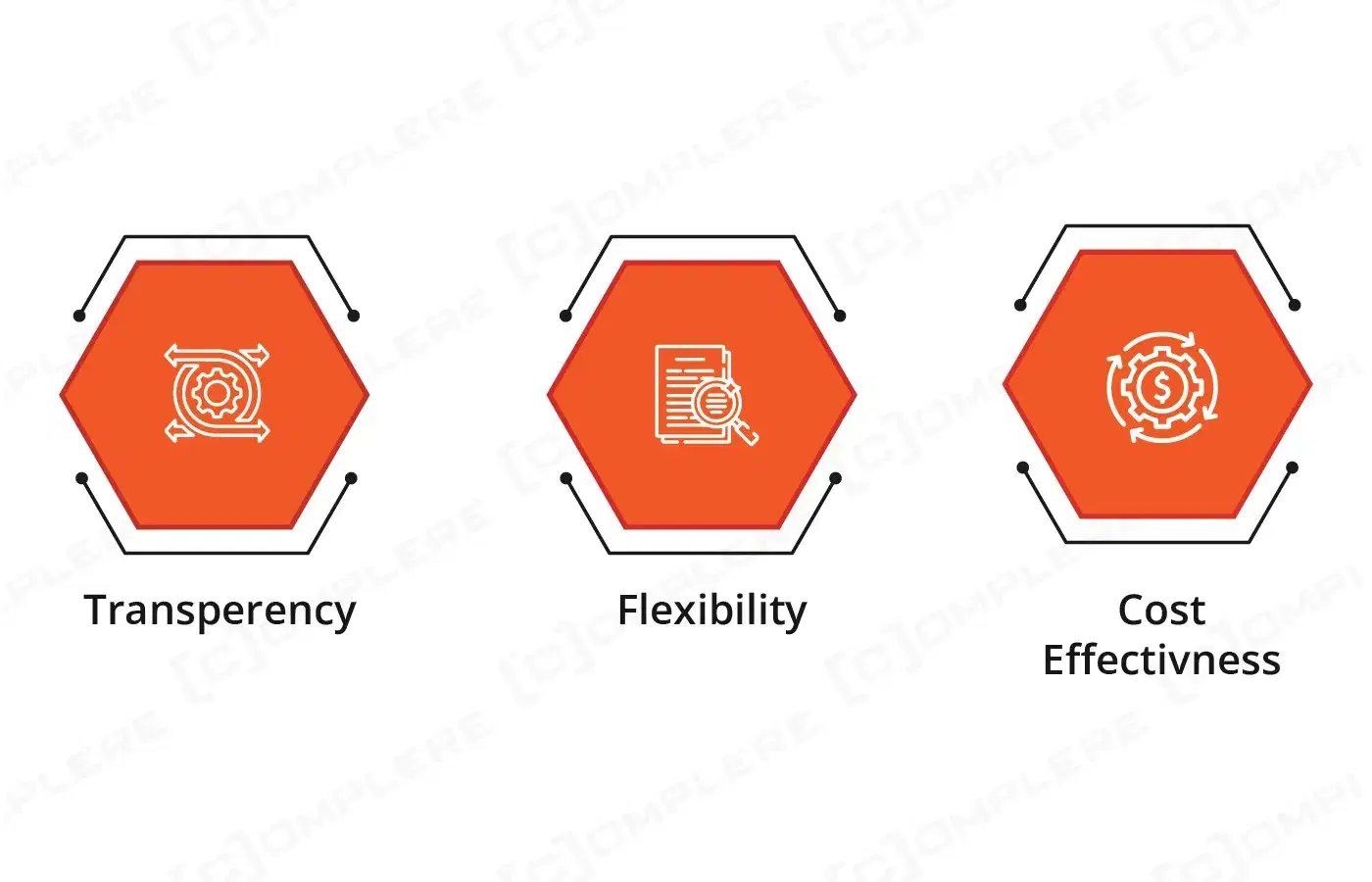
- Transparency: Raw data is saved in its entirety. It makes sure that your original data remains accessible to future users.
- Flexibility: The Bronze layer can manage different types of data, structures and formats. This is how it makes it flexible to different sources of data.
- Cost-effective: Using data lakes to store data is a cost-effective solution, especially for big amounts of information
Silver Architecture:
The Silver Architecture is a layer at which the raw data of the bronze layer is cleansed and innovated before being enriched. The Silver layer focuses on improving the quality of data and allowing it to be used for both operational and analytical use.
Key Characteristics of Silver Architecture:
- Data Transformation: The data is cleaned and filtered to remove issues like duplicates, missing values, and inconsistencies, ensuring better quality for analysis.
- Enhancement: Extra context or metadata is added to the data, improving its value and usability for more effective decision-making.
- Structured Data: The data is converted into a structured format, making it easier to search and analyze.
- Data Warehouse: The refined data (silver layer) is typically stored in a data warehouse, providing efficient storage and processing capabilities for analytical tasks.
Benefits of Silver Architecture:
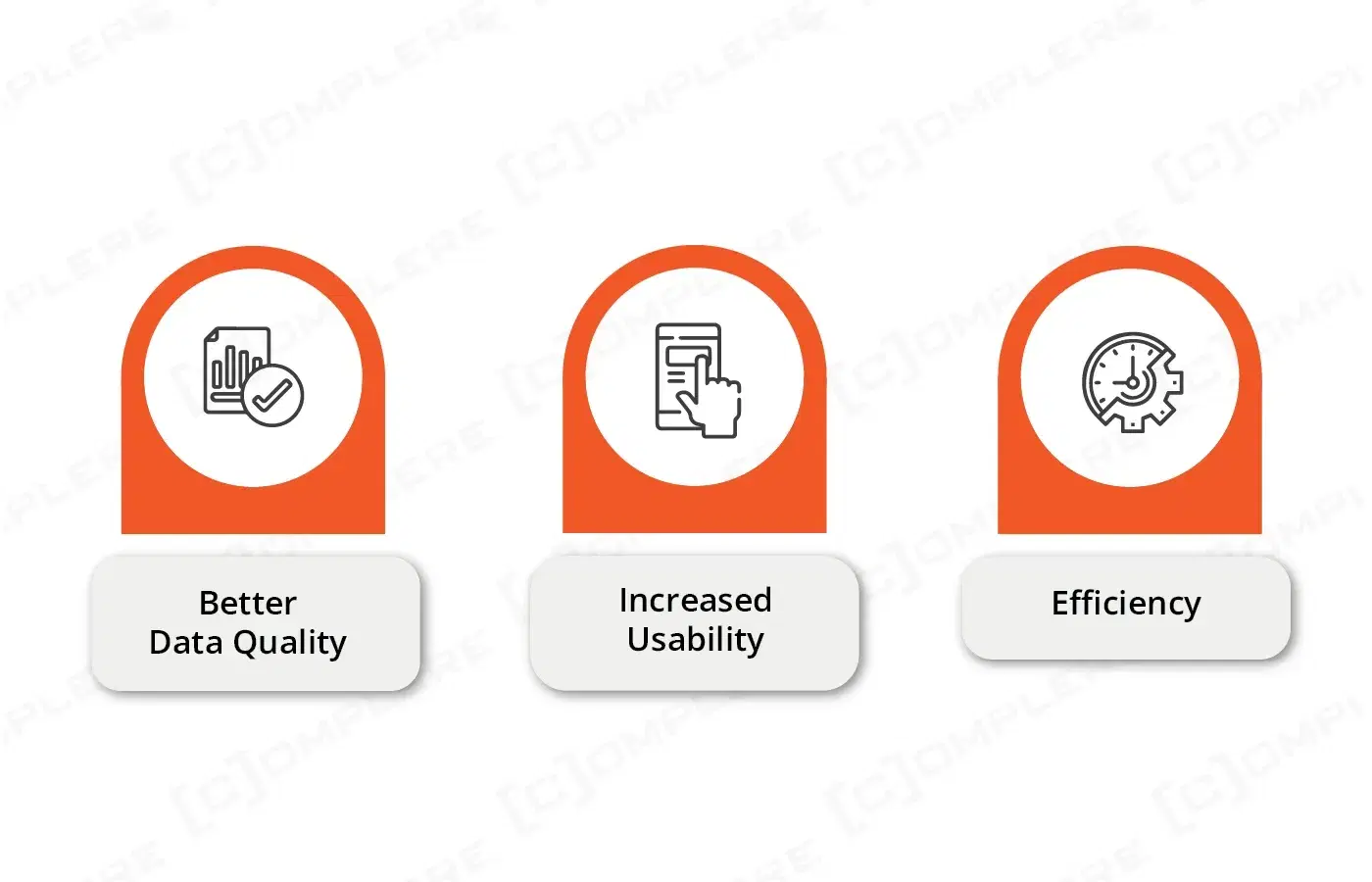
- Better Data Quality: Cleansing and innovation will ensure that your information is correct, consistent and reliable.
- Increased Usability: Structured and improved data is more easily accessible and can be used for analysis and operational reasons.
- Efficiency: Storing data in a data warehouse improves the performance of queries, which allows for more efficient data analysis and retrieval.
Gold Architecture
Gold architecture is the most advanced layer in which the data from silver layer gets further refined and consolidated to match with your specific requirements. This layer was designed for the highest performance in analytics and reporting.
Key Characteristics of Gold Architecture:
- Aggregation: The data is synthesized and aggregated to produce the most important metrics and key performance indicators (KPIs).
- Business Logic: Business rules, specific business logic and other requirements are implemented to data adapting it to meet the needs of an organization.
- Data Reporting: Information is designed and optimized for visualization and reporting tools. This advancement allows for data-based decision making.
- Data Mart: The gold data is typically kept in data marts which are a subset of data warehouses that are focused on business sectors.
Benefits of Gold Architecture:
- Useful Information: The aggregation and summarization of information provides valuable information that helps in strategic decisions.
- Customization: Data can be modified to meet the specific requirement of different businesses or stakeholder groups.
- Performance: High-performance storage and processing makes sure that your data is available to report and analyze.
Incorporating Bronze Silver, Gold Architecture with Databricks Implementing Bronze, Silver, and Gold Architecture using Databricks
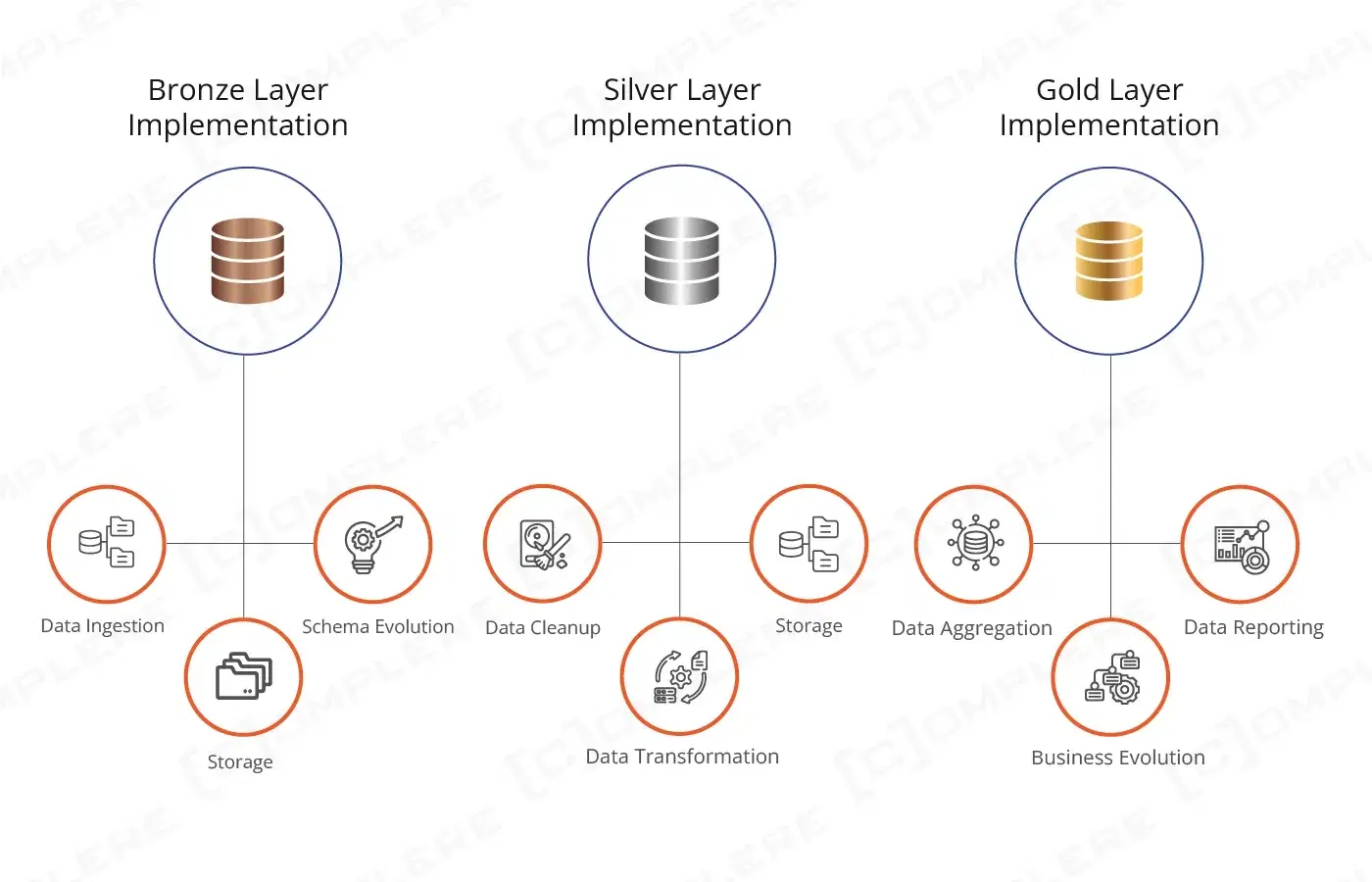
The implementation of a bronze, silver, and gold architecture using Databricks is a matter of using its impactful data processing and management capabilities. Below is how Databricks helps each of the layers of the structure:
Bronze Layer Implementation
- Data Ingestion: Databricks gives different data ingestion tools. These tools may include Databricks Delta and Apache Kafka for ingesting data from different sources in batch or real-time in batch.
- Storage: The raw data is stored within Databricks Delta Lake, which is a combination of the scalability and capacity of data lakes and the reliability and efficiency of the data warehouses.
- Schema Evolution: Databricks Delta Lake allows schema evolution. This approach allows flawless changes to data structures over the course of.
Silver Layer Implementation
- Data Cleanup: Databricks provides a big range of data processing tools, for example Apache Spark, for data cleansing and innovation.
- Data Transformation: By using Databricks notebooks, workflows, and even the concept of an ETL data engineers can develop powerful ETL pipelines that upgrades and process data.
- Storage: The data that has been upgraded can be saved inside Databricks Delta Lake or shifted to a data warehouse, for example Azure Synapse Analytics for efficient processing for analytical purposes.
Gold Layer Implementation
- Data Aggregation: Databricks provides you with the most efficient SQL as well as Spark capabilities to combine and summarize data. This results in KPIs and metrics that are high-level.
- Business Logic: Custom business logic that is custom can be implemented by using Databricks notebooks. It makes sure that the data is in line with certain requirements of your business.
- Data reporting: Databricks is compatible with popular reporting and visual tools, for example, Power BI and Tableau. These tools make it possible to flawlessly visualize data along with report generation.
The Bronze, Silver, and Gold architecture helps with a strong structure for effectively managing data. With Databricks' advanced data management and processing technology, businesses can be confident that their data is high-quality, easily accessible, and customized to meet their specific needs. This systematic approach does more than improve the usability of data, but also improves the development of new ideas in strategic and tactical decision making.
What Bronze, Silver, and Gold Architecture Looks Like in Practice in 2026
Understanding the architecture is one thing. Seeing what it delivers in a real business environment is what helps leaders justify the investment.
In financial services, the three layers turn 48-hour manual credit risk processes into continuously running, governed pipelines — Bronze ingests raw transaction data, Silver cleanses and standardises it, Gold delivers a single aggregated risk view that compliance and credit teams act on in real time.
In healthcare, the same framework replaces monthly manual reporting cycles with live clinical dashboards — raw EHR records preserved in Bronze for audit, standardised across systems in Silver, and delivered as governed patient outcome reports in Gold.
In healthcare, the same framework replaces monthly manual reporting cycles with live clinical dashboards — raw EHR records preserved in Bronze for audit, standardised across systems in Silver, and delivered as governed patient outcome reports in Gold.
In retail, it powers personalisation and demand forecasting simultaneously — unifying clickstream, transaction, and inventory data across dozens of sources into a clean, structured Gold layer that both the recommendation engine and supply chain model depend on.
As Puneet Taneja, CTO of Complere Infosystem, puts it: "The Bronze, Silver, Gold framework is not just an architecture choice — it is a trust choice. When business users know every number on their dashboard has passed through a validated, governed pipeline, they stop questioning the data and start acting on it. That shift is where business value actually lives."
The architecture works because each layer has one job — and Databricks executes each reliably at any scale.
Conclusion
The Bronze, Silver, and Gold designs for managing data using Databricks is a technologically advanced solution that helps businesses to improve their processes for managing data. By separating data into different layers, each with its own unique characteristics and benefits. All different structures ensure that data is collected, cleaned, processed, and used in ways that boost its value.
Click here to connect with Databricks experts and start visualizing data, generating insightful reports, and making smarter decisions.